PHP’s Emergency Security Fix Wasn’t the End of the Story
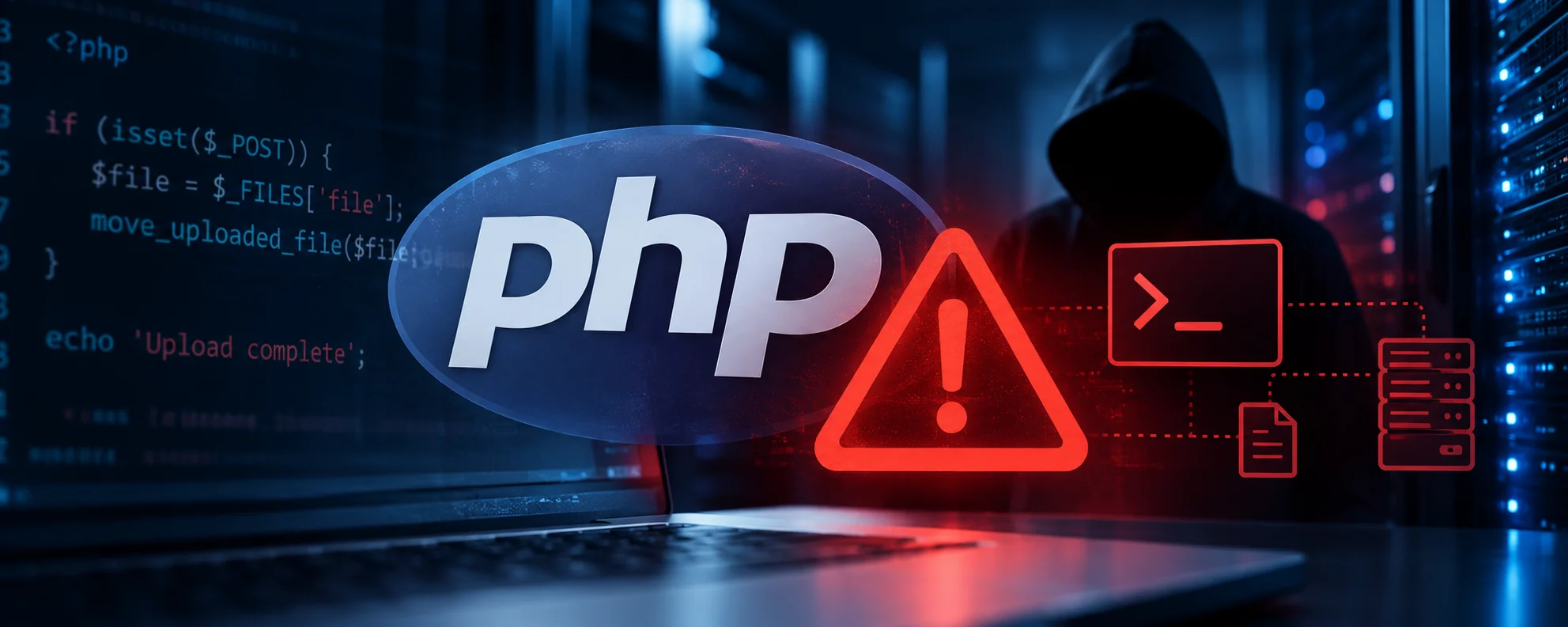
A critical security flaw in PHP can turn an ordinary web request into a potential entry point for an attacker. In October 2026, two vulnerabilities known as PHP2Shell forced administrators to urgently update their PHP installations. Two days later, another security concern emerged: the initial updates had not addressed every possible route to remote code execution.
The development matters because PHP runs behind a vast range of websites and business applications. A vulnerability in the underlying runtime can put multiple applications at risk, even when their developers have followed secure coding practices.
For security teams, the lesson is straightforward: installing a security update is essential, but verifying what the update actually fixes is equally important.
What Is PHP2Shell?
PHP2Shell is the name given to two critical PHP vulnerabilities disclosed on October 21, 2026:
1. CVE-2026-109618: A flaw in how PHP handles memory-related failures.
2. CVE-2026-109619: A flaw involving references to memory that PHP has already released.
Both vulnerabilities received a CVSS v4.0 severity score of 9.2 out of 10. Under certain conditions, an unauthenticated attacker could exploit these flaws to execute code on an affected server.
In practical terms, an attacker may not need a valid account or an application-level vulnerability to begin an attack. A specially crafted request could trigger the vulnerable behavior inside PHP itself.
The risk is particularly serious for internet-facing servers using Apache with mod_php, where researchers demonstrated an attack that could trigger before the application’s own code executes. Other PHP execution environments, including PHP-FPM and CGI, are also relevant, although exploitability varies by configuration.
Source: Official PHP security advisory.
How Can a PHP Vulnerability Affect an Entire Website?
PHP processes requests, manages memory, and executes the application code that produces a website’s responses. Problems in these internal operations can affect the security of the application running on top of them.
Consider a website that accepts file uploads, processes customer information, and connects to a database. If an attacker gains code execution through a vulnerable PHP runtime, the attacker may be able to operate with the permissions available to the PHP process.
Depending on those permissions, this could expose application files, configuration data, database credentials, or other secrets. An attacker might also modify accessible files or attempt to move into connected systems.
This does not mean every vulnerable website will be compromised, or that successful exploitation automatically gives an attacker complete control of the server. The actual consequences depend on the environment and the privileges available to the compromised process.
Nevertheless, the vulnerability exists below the application’s normal business logic. That makes runtime security a concern for both application developers and infrastructure teams.
The First Fixes Arrived. Then Another Vulnerability Emerged.
On October 21, PHP released security updates addressing the two original PHP2Shell vulnerabilities.
| PHP branch | Initial fixed release |
|---|---|
| PHP 8.5 | 8.5.12 |
| PHP 8.4 | 8.4.27 |
| PHP 8.3 | 8.3.36 |
| PHP 8.2 | 8.2.35 |
Administrators were advised to update affected installations immediately.
However, on October 23, the PHP security team published additional information about CVE-2026-115560, a related remote-code-execution risk that was not addressed by the October 21 releases.
The additional vulnerability involves PHP’s session upload-progress feature and an uncommon combination of configuration settings and application behavior. It is not evidence that the original fixes were defective. Instead, it demonstrates that the initial updates did not cover every related attack path.
The PHP team recommended disabling session upload progress while a permanent fix is prepared for a regular bug-fix release.
Source: PHP official security announcements.
What Should Organizations Do Now?
The response should include more than updating the version number displayed by a server.
1. Identify every PHP installation
Check production servers, staging environments, containers, virtual machines, and managed hosting platforms. PHP may also be installed as part of a third-party product even when an organization does not develop PHP applications directly.
2. Install the appropriate security updates
Update vulnerable installations to the relevant fixed release or apply the corresponding security update supplied by the operating-system or hosting vendor. For older PHP branches, verify whether the vendor provides a backported fix or whether migration is required.
3. Apply the additional mitigation
Until the follow-up issue is addressed by an appropriate release, configure:session.upload_progress.enabled=0
Apply the setting at the server or PHP-FPM configuration level, where it takes effect before request processing. Restart the relevant PHP workers and verify that the setting remains disabled.
This measure addresses the documented session-related attack path; it does not replace patching for the original PHP2Shell vulnerabilities.
4. Check whether the updated runtime is actually running
A command such as php -v reports the command-line PHP version, which may differ from the version used by the web server. Validate the runtime serving requests, check container images, and confirm that old workers or outdated deployments are not still active.
5. Review activity for signs of compromise
Inspect available web-server, host, and network logs for suspicious requests, unexpected processes, unauthorized file changes, and unusual outbound connections. Investigate suspicious activity rather than assuming that a successful version check proves the system was never exposed.
These steps should be prioritized for publicly accessible systems and services that handle sensitive data.
Why This Matters Beyond PHP
The PHP2Shell incident highlights a recurring challenge in vulnerability management: security updates address identified defects, but additional investigation can reveal related issues that require separate fixes or mitigations.
Organizations that treat patching as a one-time activity may overlook follow-up advisories, vendor-specific fixes, or systems that were missed during the initial response.
A stronger process includes maintaining an accurate inventory of deployed software, assigning responsibility for remediation, tracking vendor advisories, and independently verifying that fixes have reached every affected environment.
Security teams should also distinguish between a vulnerable version, a version with a vendor backport, a temporary mitigation, and a fully remediated deployment. These are different states and should not be reported as interchangeable.
The Takeaway
PHP2Shell is a reminder that application security extends beyond the code developers write. The runtime, hosting environment, configuration, and deployment process all contribute to the security of a production application.
The October 23 follow-up disclosure makes one point particularly clear: a patched PHP version did not, by itself, address every known issue associated with this incident.
Organizations should apply the original security updates, implement the additional mitigation, verify the running configuration, and continue monitoring official advisories until the follow-up issue is addressed.


Comments
No comments yet — start the conversation.