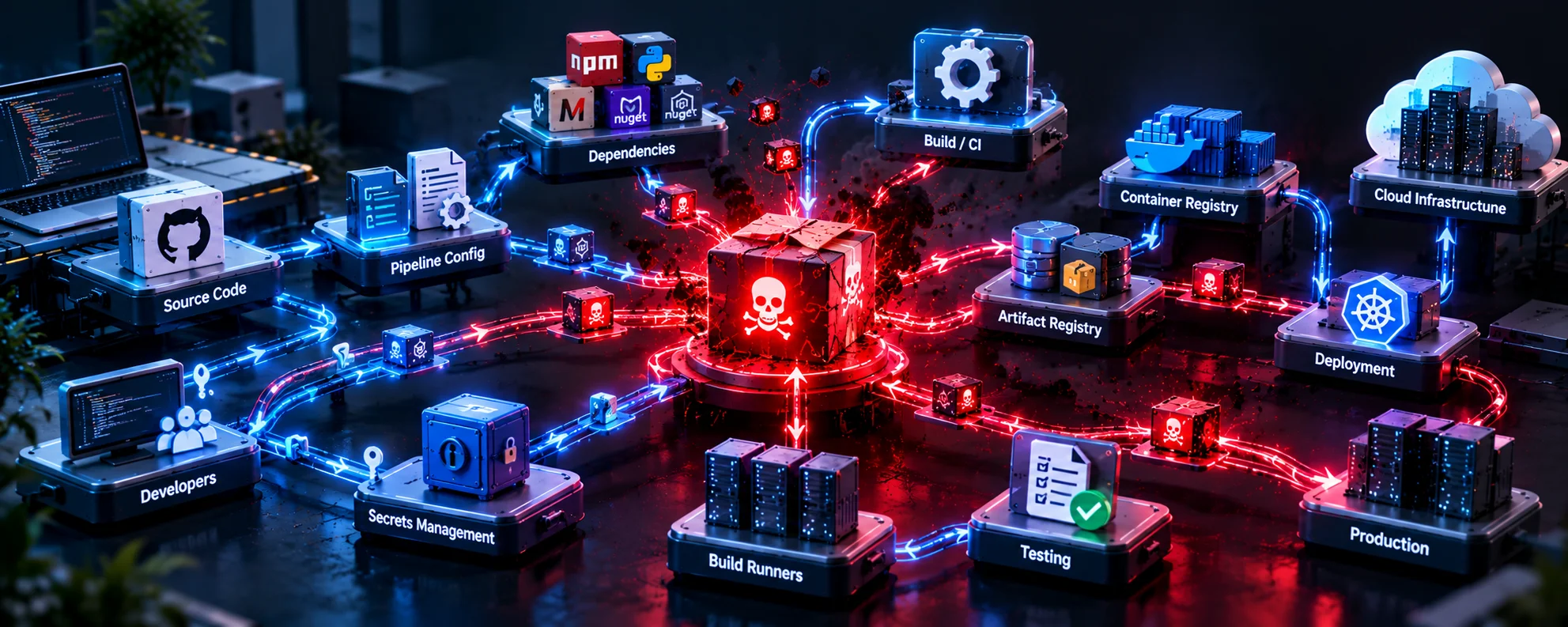
The Security Risks Hidden Inside Your CI/CD Pipeline
CI/CD pipeline security is essential for protecting source code, build artifacts, deployment credentials, and production environments from attackers targeting the software development lifecycle.
Continuous integration and continuous delivery (CI/CD) pipelines automate how software is built, tested, and deployed. They help development teams release changes faster, but they also connect source code repositories, package registries, build runners, cloud environments, and production systems.
These connections make CI/CD infrastructure a valuable target for attackers. A compromised pipeline can allow malicious code to enter legitimate software releases, expose credentials, or provide unauthorized access to production environments. Because these activities may occur within trusted automation processes, they can be difficult to distinguish from normal development operations.
Why CI/CD Pipelines Are High-Value Targets
CI/CD systems frequently require access to source code, deployment credentials, cloud resources, and external dependencies. In some environments, a single pipeline can build an application, publish its artifacts, and deploy them directly to production.
If an attacker compromises a developer account, steals a pipeline token, or exploits a vulnerable build runner, these permissions can provide a path to sensitive systems. The risk increases when credentials are long-lived, service accounts have excessive privileges, or multiple projects share the same build infrastructure.
Pipeline configuration files are also part of the attack surface. Changes to workflow definitions can alter which commands execute, which dependencies are downloaded, and where build artifacts are sent. Without appropriate review and monitoring, unauthorized changes may pass through the same automation processes used for legitimate releases.
How Attackers Exploit CI/CD Weaknesses
One common attack path involves exposed secrets. Credentials stored in source code, pipeline variables, logs, or poorly secured configuration files may allow attackers to access cloud resources or publish unauthorized software.
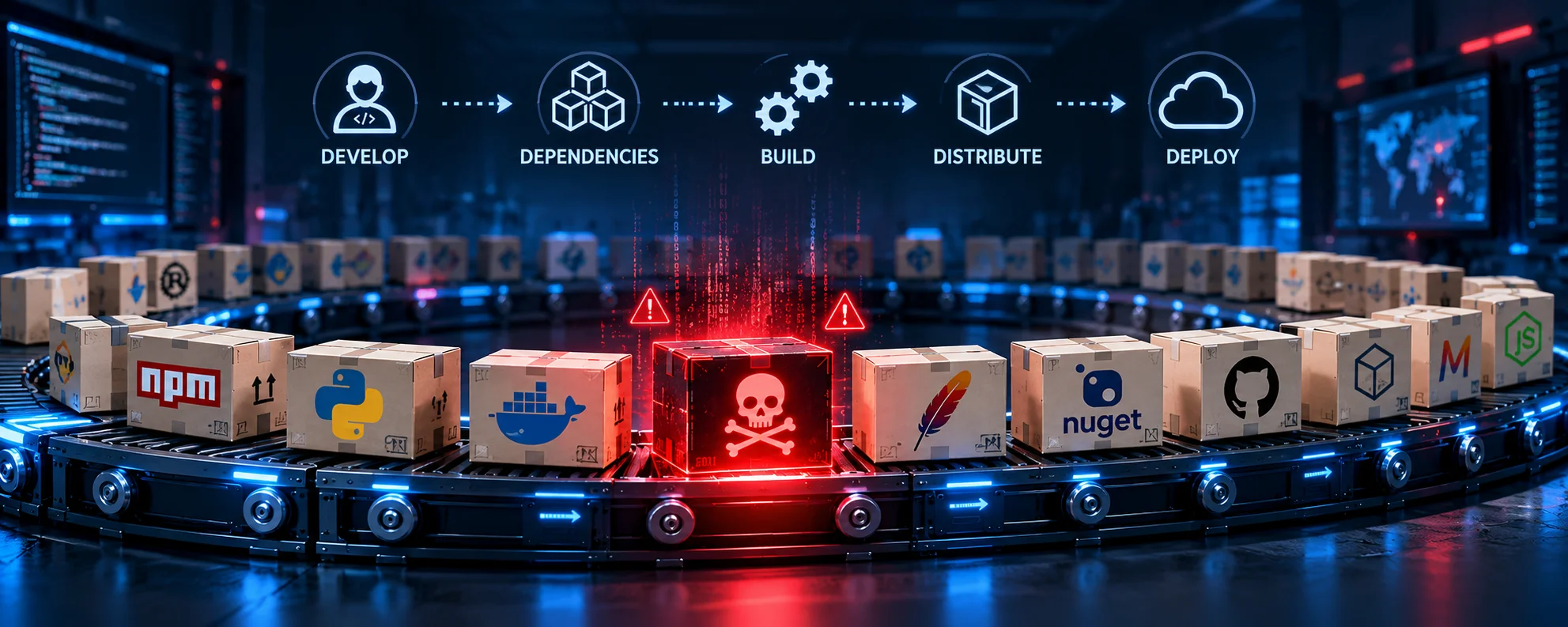
Another risk comes from untrusted dependencies and build tools. A pipeline that automatically downloads packages without sufficient integrity checks may introduce a compromised component into the resulting artifact.
Attackers may also exploit excessive workflow permissions. For example, a pipeline that exposes deployment credentials to untrusted code could allow an attacker to extract those credentials during execution. Similarly, a compromised build runner may be used to alter artifacts before they are signed or deployed.
These scenarios demonstrate why reviewing application source code alone is insufficient. The security of the build and deployment process also determines whether the final software artifact can be trusted.
What Happens When a Build Pipeline Is Compromised?
A compromised pipeline can produce an artifact that differs from the source code reviewed by developers. If the altered artifact reaches production, the resulting application may contain malicious functionality even when the original source code appears clean.
The impact may extend beyond a single application. Shared build runners, reusable workflows, deployment credentials, and artifact registries can connect multiple projects. An attacker who compromises one component may attempt to access other environments or tamper with additional releases.
Organizations need to establish which source revision, dependencies, and build environment produced each release. Build logs, artifact provenance, and integrity verification help investigators determine whether an artifact has been altered and identify potentially affected deployments.
How to Improve CI/CD Pipeline Security
Effective CI/CD pipeline security requires controls across source code, build infrastructure, credentials, and deployment processes.
Enforce least privilege: Give pipelines only the permissions required for their specific tasks.
Protect secrets: Use a secrets manager or secure credential store, avoid hardcoding credentials, and rotate exposed secrets promptly.
Secure source repositories: Require reviews for sensitive workflow changes and protect critical branches.
Isolate build environments: Use controlled, preferably ephemeral build runners and avoid sharing sensitive credentials with untrusted jobs.
Verify dependencies: Control package versions where appropriate and validate package integrity before use.
Protect artifacts: Generate provenance records, sign release artifacts where feasible, and verify them before deployment.
Monitor pipeline activity: Investigate unexpected workflow changes, unusual credential use, unauthorized releases, and suspicious access to build infrastructure.
Security testing should cover pipeline configurations and permissions, not just the application code produced by them. Organizations should also review which external actions, plugins, and reusable workflows their pipelines trust.
The NIST Secure Software Development Framework provides guidance for integrating security practices throughout the software development lifecycle.
Conclusion
CI/CD pipelines are critical components of the software supply chain and should be protected accordingly. Excessive permissions, exposed credentials, untrusted dependencies, and insufficient artifact verification can undermine otherwise effective application security controls.
Organizations should secure pipeline identities, isolate build environments, validate release artifacts, and maintain reliable records of how software is produced. Protecting the build process is essential to ensuring that reviewed source code results in trustworthy software reaching production.

Comments
No comments yet — start the conversation.