
When Trusted Software Becomes the Attack Vector
Discover how supply chain attacks bypass traditional security controls and how organizations can reduce the risk.
Software Supply Chain Security
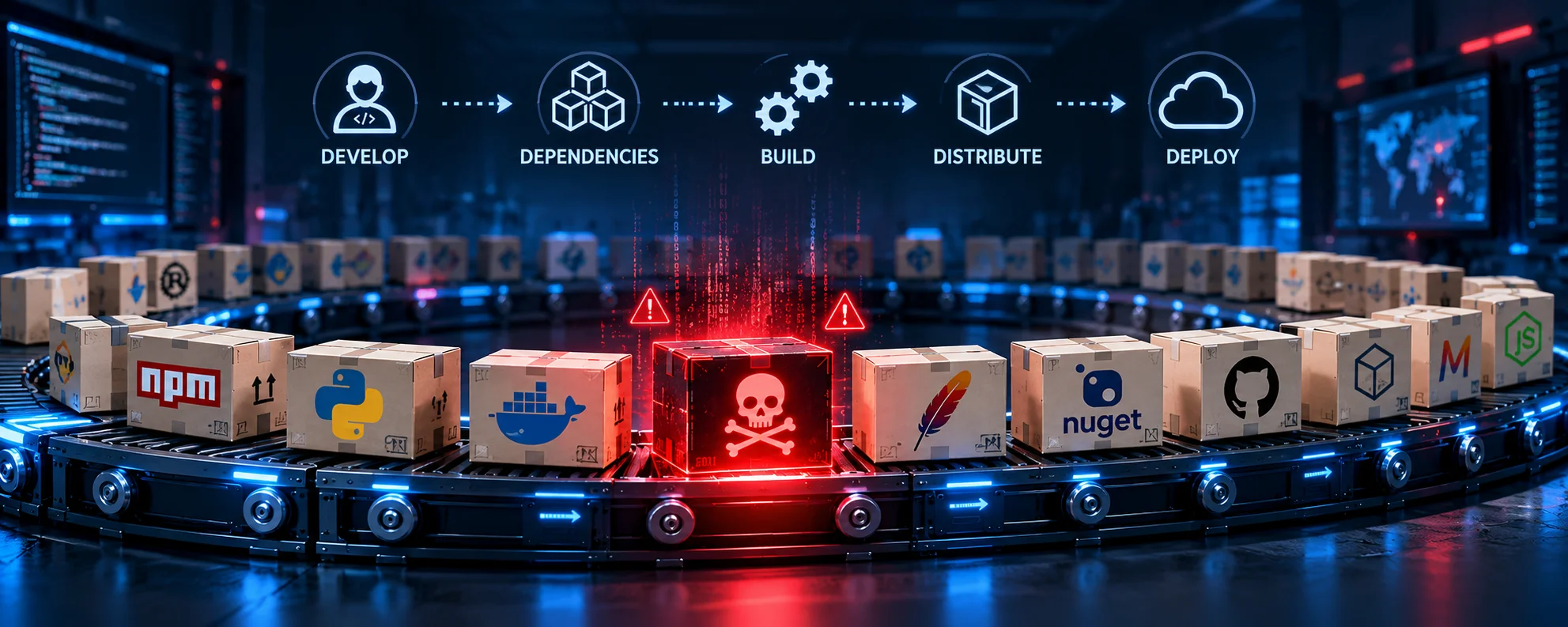
organizations rely on trusted software vendors, signed updates, and established distribution channels to maintain their systems. However, trust in a software provider does not guarantee that every update or component is secure. If attackers compromise a vendor's development environment or distribution infrastructure, legitimate software can become a delivery mechanism for malicious code.
Software supply chain security is critical for organizations that rely on trusted software vendors, signed updates, and established distribution channels. However, trust in a software provider does not guarantee that every update or component is secure. If attackers compromise a vendor's development environment or distribution infrastructure, legitimate software can become a delivery mechanism for malicious code.
How Trusted Software Becomes a Threat
Software vendors often have privileged access to customer environments through updates, integrations, remote management tools, and deployment agents. These relationships create opportunities for attackers who gain control of a vendor's systems or software distribution process.
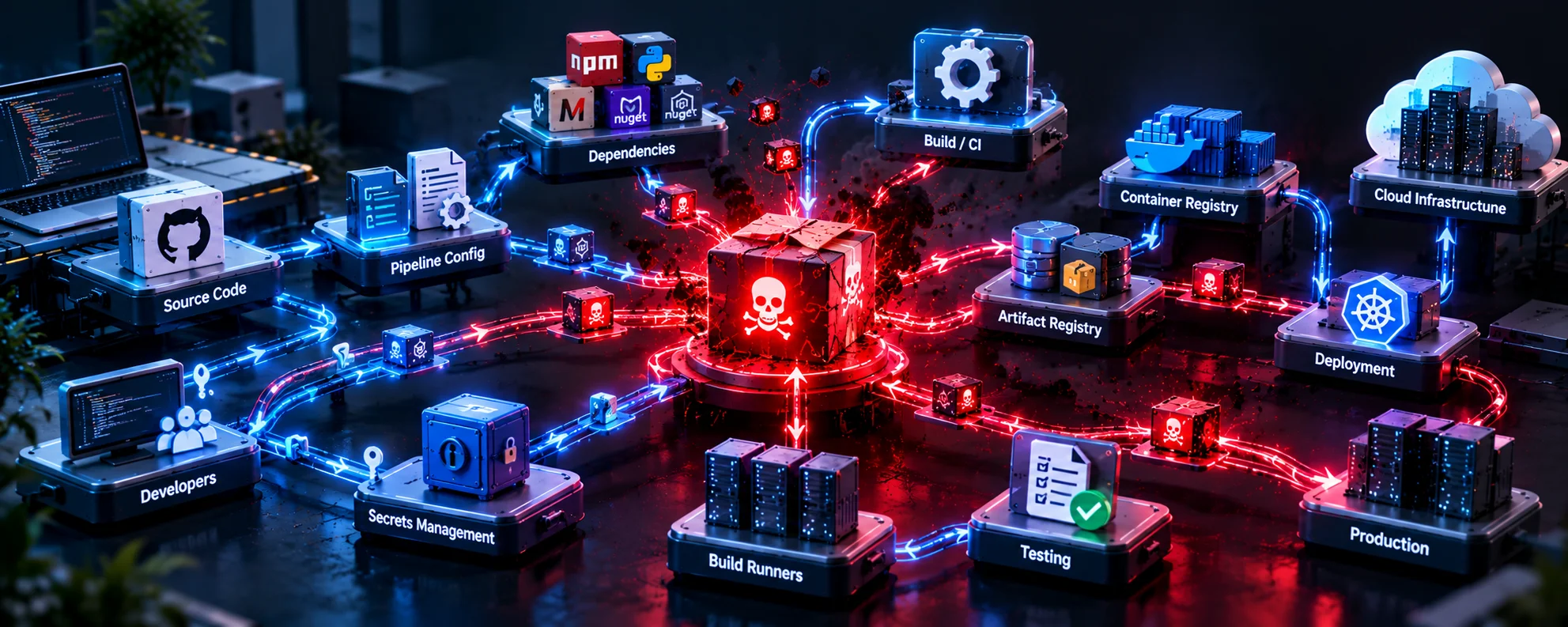
An attacker may compromise a developer account, modify source code, tamper with a build process, or manipulate an update mechanism. If the resulting software is distributed through a legitimate channel, customers may install it as part of their normal maintenance activities.
Digital signatures help verify software authenticity and integrity, but they do not guarantee that the signed software is free from malicious functionality. If an attacker compromises the signing process or an authorized build environment, malicious code may still be signed and distributed.
Lessons from Real-World Supply Chain Attacks
The SolarWinds incident demonstrated how compromising a trusted software development and distribution process can affect numerous downstream organizations. Malicious code was introduced into software updates, allowing attackers to reach customers through a legitimate update mechanism.
The Codecov incident highlighted another supply chain risk: compromised software distribution infrastructure can expose sensitive information. Attackers modified a script used in Codecov's CI process, potentially enabling the collection of credentials and environment variables from customer build environments.
These incidents illustrate that software trust extends beyond the application itself. Development systems, build pipelines, update mechanisms, and vendor access must also be secured.
Why Traditional Security Controls Can Miss Trusted Software
Traditional security controls often evaluate whether software comes from an approved vendor, carries a valid digital signature, or passes an initial security scan. These checks are valuable, but they cannot independently establish that software is safe.
Approved applications may receive less scrutiny because they are already trusted. Security monitoring that focuses primarily on unknown executables or blocked downloads may overlook suspicious activity originating from legitimate software.
Organizations should monitor software behavior after deployment, restrict application privileges, validate updates, and investigate unusual outbound connections or unexpected process execution. Application allowlisting and endpoint detection can provide additional visibility, but they should be supported by effective logging and incident response procedures.
How Organizations Can Reduce the Risk
Organizations should establish controls that verify software throughout its lifecycle.
Verify software integrity: Validate digital signatures, checksums, and artifact provenance where supported.
Secure update mechanisms: Restrict who can publish releases and protect signing keys with strong access controls.
Apply least privilege: Limit the permissions granted to installed applications, agents, and vendor integrations.
Monitor application behavior: Investigate unexpected network connections, process execution, and access to sensitive resources.
Assess critical vendors: Review their development security, incident notification processes, and access to organizational systems.
Maintain an inventory: Track software components and versions to identify potentially affected systems when a compromise is disclosed.
Organizations should also integrate security checks into procurement, development, deployment, and ongoing monitoring rather than treating software approval as a one-time activity. The NIST Secure Software Development Framework (SSDF) provides guidance for incorporating security practices into the software development lifecycle.
For organizations managing multiple applications and vendors, maintaining visibility into software components is particularly important. An accurate Software Bill of Materials (SBOM) can help identify applications that use an affected component when a vulnerability or compromise is reported.
Conclusion
Trusted software can become an attack vector when the systems and processes behind it are compromised. Vendor reputation, digital signatures, and established distribution channels are important trust signals, but none independently guarantees software security.
Organizations must verify software integrity, limit privileges, monitor behavior, and maintain visibility into their dependencies. The objective is not to eliminate trust in software vendors, but to ensure that trust is supported by continuous verification and effective security controls.
However, protecting trusted software is only part of the challenge. The build and deployment infrastructure can also introduce security weaknesses if attackers compromise pipeline configurations, credentials, or build artifacts. Read our article, The Security Risks Hidden Inside Your CI/CD Pipeline, to understand how attackers exploit CI/CD environments and how organizations can protect their software delivery processes.

Comments
No comments yet — start the conversation.